Brisbane's War Relics
Updated: Jun 07, 2026
Brisbane is awash with war memorials from the world wars and relics from its time as Asia Pacific HQ under General Douglas Macarthur in World War II.
From gracious World War I memorial parks to striking sculptures, a war museum and air raid shelters turned bus stops, here are some of the reminders of the great wars and those who lost their loves.

Every day we meander/drive/ride past all kinds of relics and remembrances of the Great War and World War II without pausing for thought or reflection so this weekend, for those who haven’t snaffled it up as an extension of the Easter holidays or last-long-weekend-before-June-to-get-away, there is ample opportunity to get to know your neighbourhood nod to a world war.
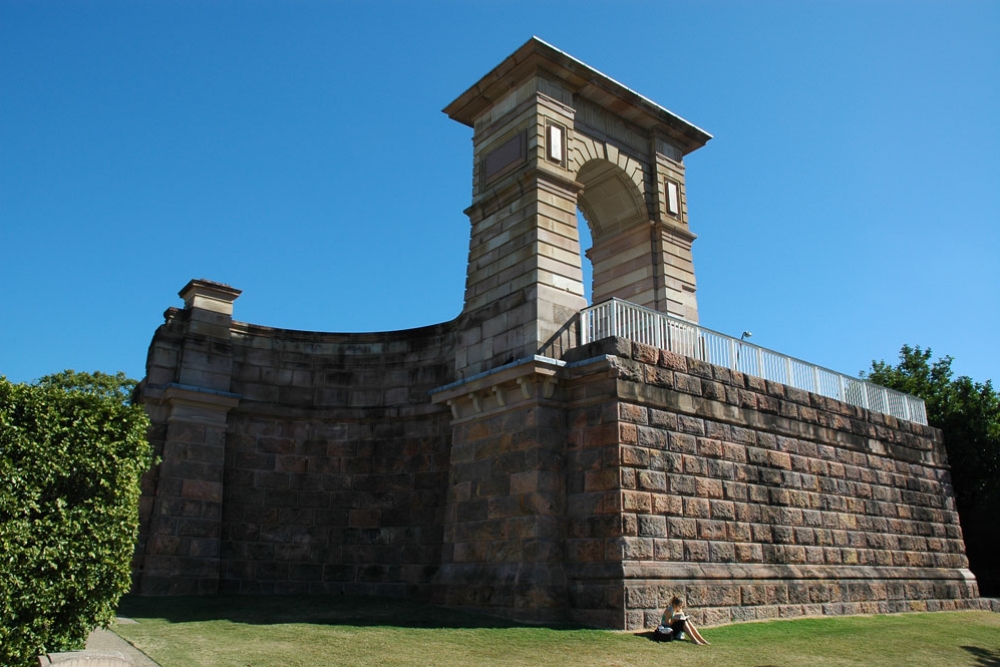
In the wake of World War I, parks, statues and monuments were rapidly constructed in response to the massive outpouring of grief from a nation who had lost one tenth of its sons/brothers and husbands in killing fields far away and whose bodies would never be brought home to rest and be grieved. Instead they were immortalised with their names listed on plaques attached to monuments. Others returned home with missing limbs or to die some time later and painfully from the after effects of poisonous mustard gas and these too were given honourable mention.
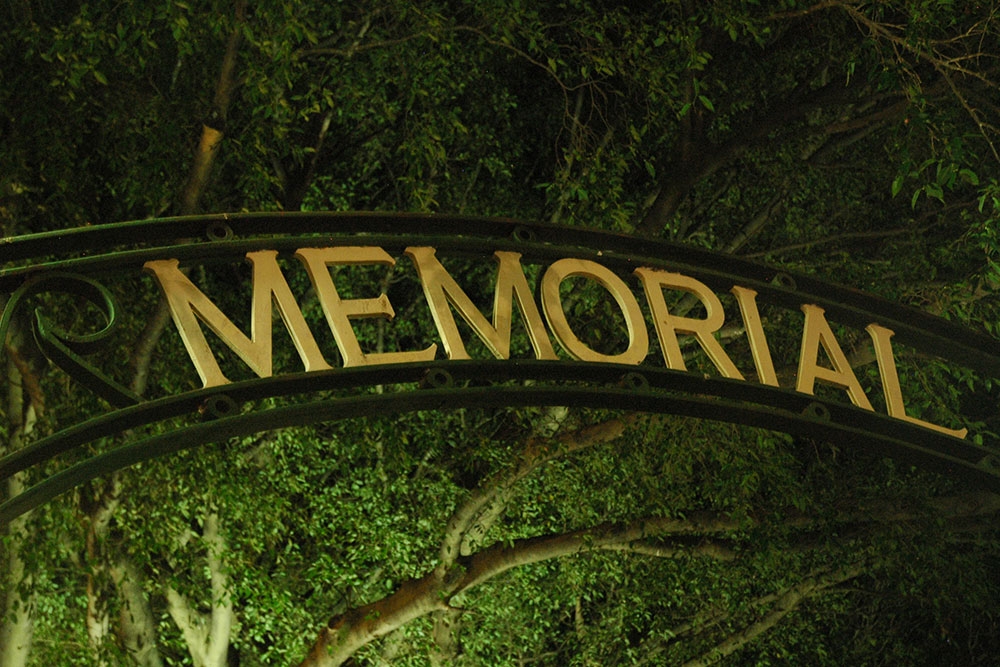
Some of Brisbane’s best prominent memorial parks are the Yeronga Memorial Park (with a cenotaph and memorial gates dedicated (unusually) to women in war, Kalinga Park (with memorial gates and an avenue of trees planted by returned diggers), Graceville and Bulimba Parks with their ornate memorial grandstands.
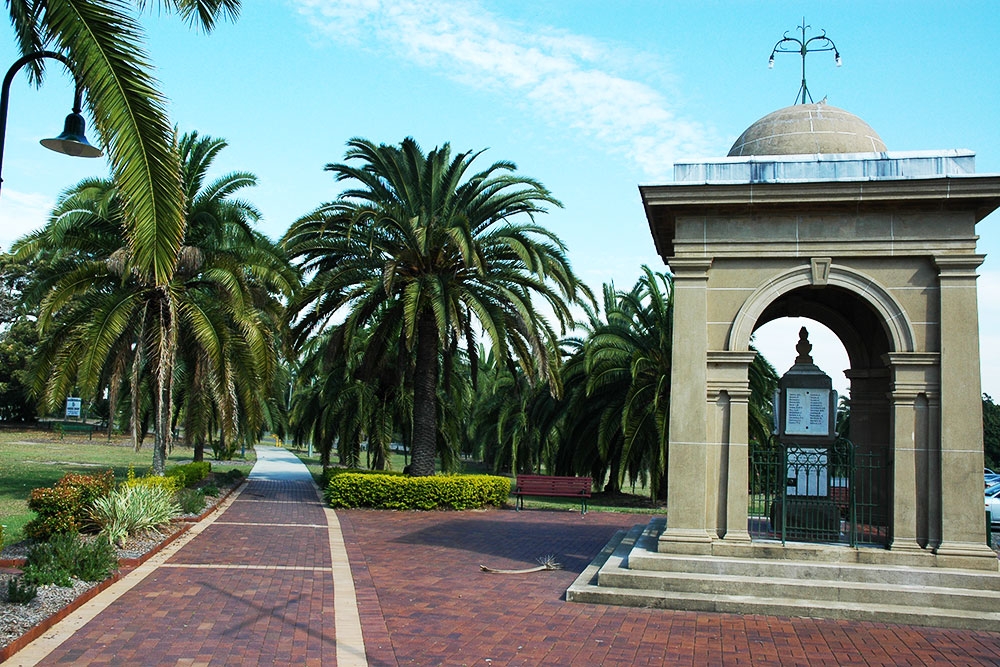
Worth a closer look is Stewart Place in Ashgrove with its cannons and curious tram shelter-turned-memorial to a battalion of ferocious Scottish soldiers and Mowbray Park (with its stately pathways of towering palms, colonial guns and very first World War I monument).
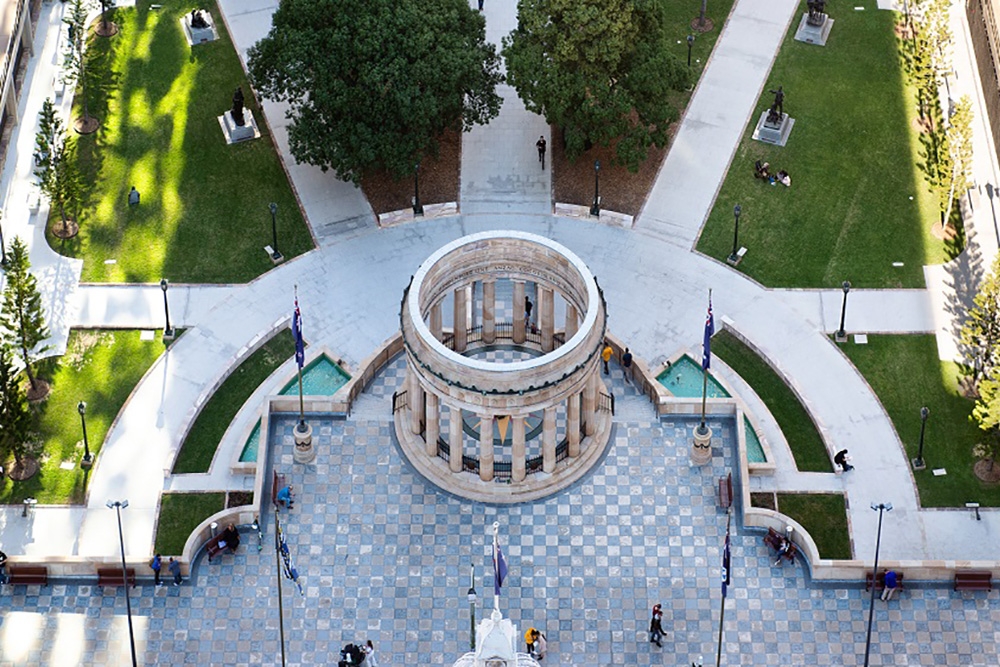
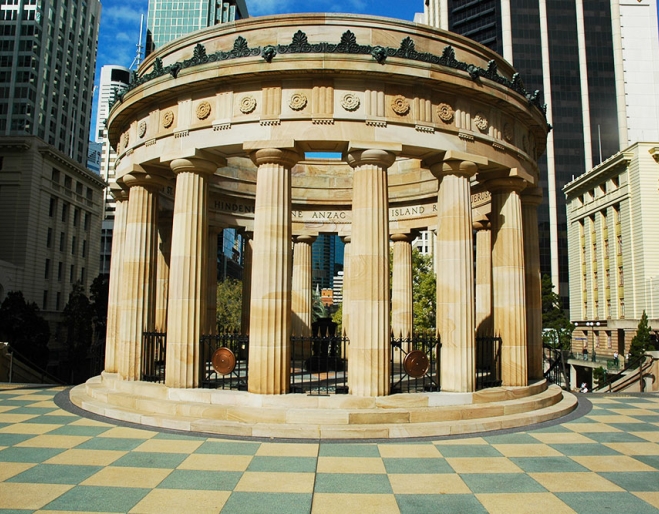
No visit to anything ANZAC of course is complete without a discovery tour of ANZAC Square, which has monuments and statues to every Australian-involved war from Boer to Vietnam and trees planted to commemorate each war.

Noteworthy here is the controversial-at-the-time WWII statue of the nurse tending the soldier, the Women’s War Memorial’s sandstone frieze by Daphne Mayo whose only brother (who died from gas poisoning) is depicted as the first figure pulling the gun carriage and, underneath the shrine the fascinating Anzac War Memorial Galleries, .a must visit for anyone interested in Brisbane's war history.

In the aftermath of World War II monuments to the fallen largely came in the form of useful public utilities like swimming pools (Yeronga Pool and Langlands Park Memorial Pool) and hospitals, although the afore-mentioned Shrine of Memories which also contains boxes of soil from World War II cemeteries where Australian troops are buried and the Macarthur Museum (with General Douglas Macarthur’s office still as it was the day he left it) are well worth a timely look.
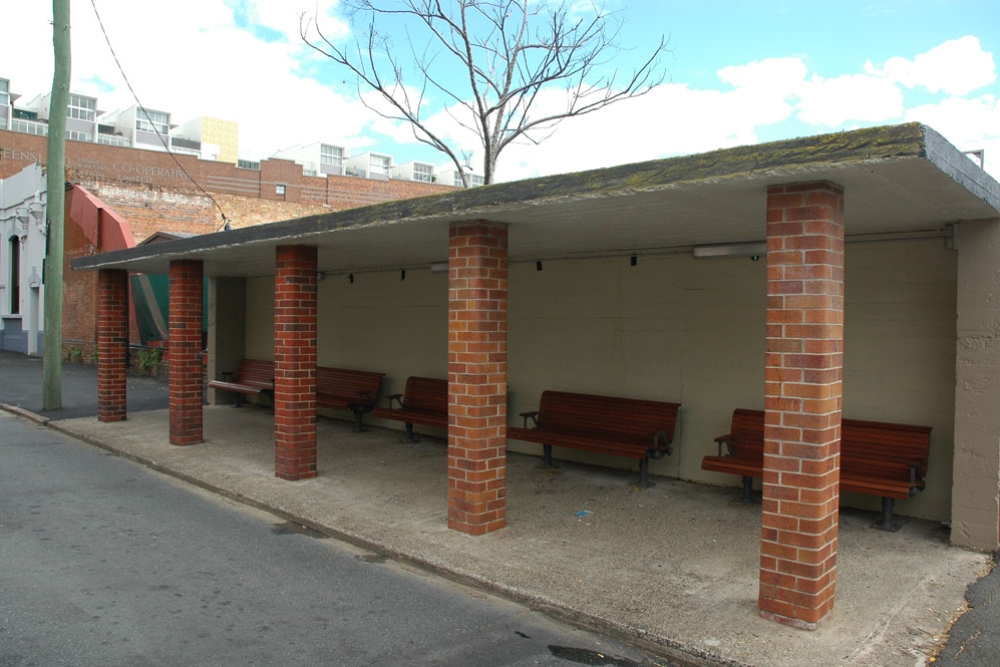
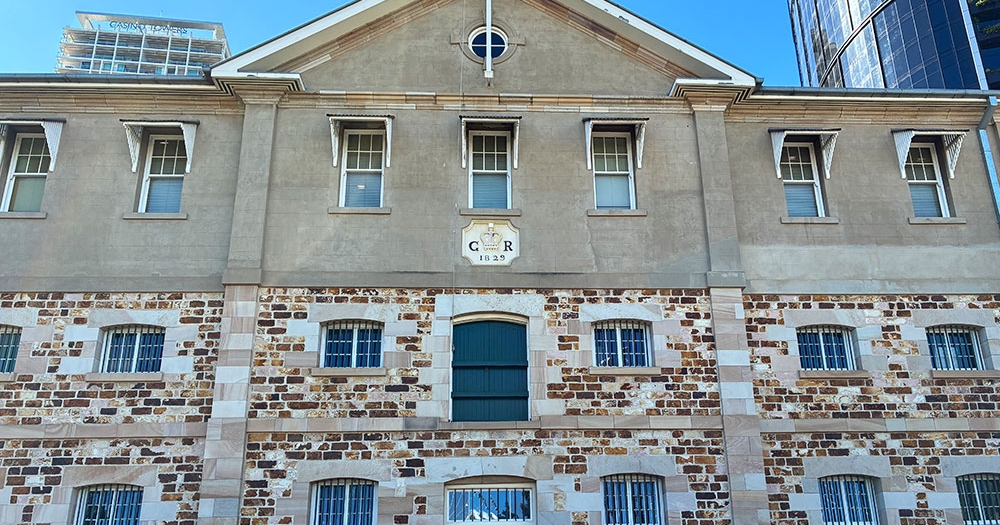
Monuments aside, the other ghostly reminders of World War II still scattered throughout Brisbane, which was the official HQ of the Asia Pacific War efforts, are the air raid shelters turned bus shelters, toilet blocks (Nundah) and the Milton espresso hut Bunker.
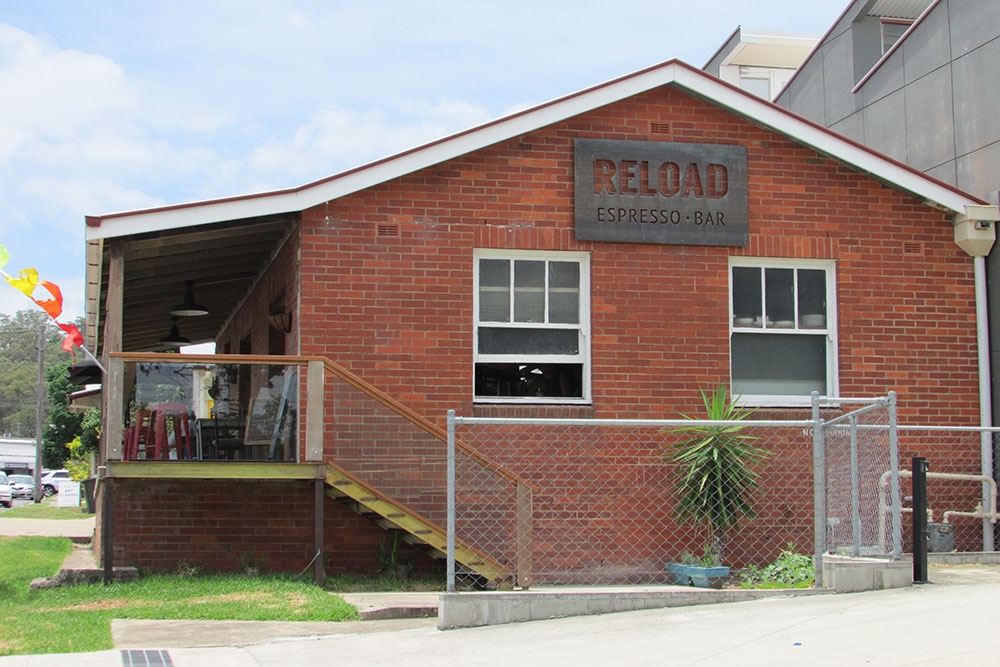
And southside industrial suburb Salisbury, which was where most of the World War II ammunition was manufactured, still has the factories that participated in the war effort, including one which is now funky local cafe Reload Espresso and The Renovator's Barn (now closed), whose roof still has the remnants of an Olympic swimming pool painted on it to deter would-be enemy bombers.